


This is Ella.
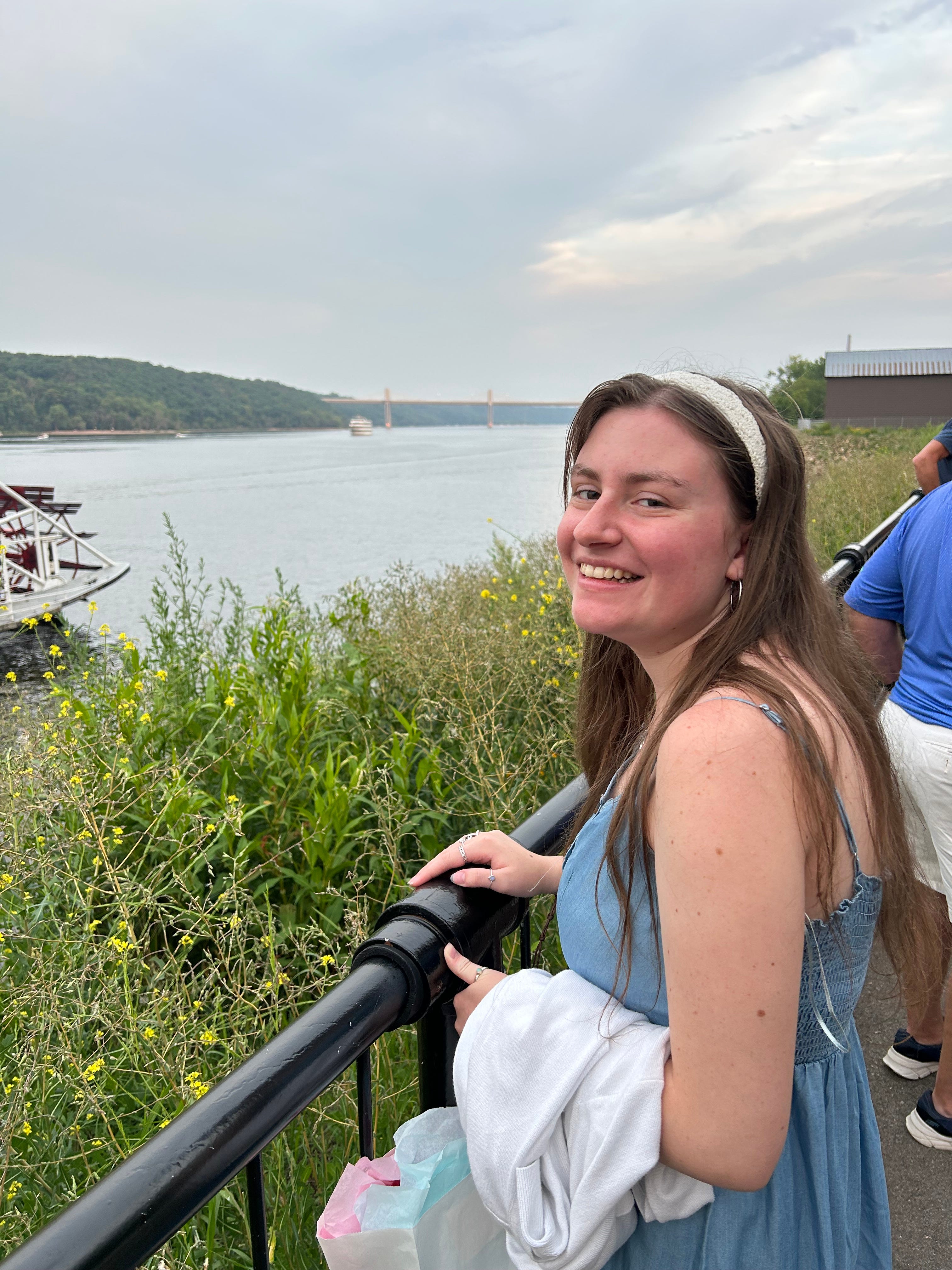
Ella is Christine’s and my youngest. She is a senior at Southern Oregon University1 in Ashland and is on track to graduate on time next June. She’s a theater major, is a conference assistant in Residential Services, and a national authority on Shakespeare, with a specialty in Romeo and Juliet.2 She is maybe the most positive person I have ever met. She always seems to be in a good mood - unless you are critical of a Broadway musical3, TV show, or book that she loves - then watch out. She is super organized and committed to a very regimented schedule. She loves Subway turkey subs, Reece’s peanut butter cups, and Marie Callendar’s chicken pot pies. She’s a night owl and her favorite place in the world is in her bed with her stuffed animals creating videos about her favorite TV shows on insta. She loves jewelry and literally has a ring on every finger.
Ella is on the autism spectrum. She is high-functioning to be sure, but in addition to the typical social challenges people on the spectrum have, she has some learning challenges. Every semester, she needs to go to Disability Services on campus and apply for accommodations for her classes. She gets more time on tests, can bring in notes to help with the recall of content, etc.
When Ella was graduating from high school, she was crystal clear about going to college. She wanted to go away to school, she wanted to study theater, and most of all she wanted to be independent. Many on the spectrum will say that independence is something they truly value. This is due in part to many around them being unsure about their ability to be independent. I can say from experience, our anxiety about Ella’s ability to live on her own made her very angry with us at times.
She earned the opportunity to go to college and we knew we needed to support her with that choice. But we were worried. Would she find a friend group? Who was going to check-in with her if she didn’t have close friends, what would happen at her first sign of difficulty? In our hearts we knew she could do it, but we weren’t sure.
The one academic area that Ella struggles with is math. Ella is challenged with basic arithmetic. She can’t immediately recite an answer to a simple multiplication problem. She can figure it out, but nothing comes easily. One reason for this challenge is that Ella’s brain is organized differently. Imagine a neurotypical brain as a well organized set of folders where you can access any piece of information you know in a second. Ella’s mind is organized a bit like all the icons on your wireless phone. She knows many things, but she needs to scroll through multiple screens with dozens of icons to access that information. Even then, she has to figure out how to pull the information out and apply it. She can do it, but it is very tempting to give up because of how much energy her brain requires to get the answer.
Needless to say, we knew college math would be really hard for her. We were concerned that failing math could torpedo her college career before it even got started. Fortunately, Ella comes from a privileged home. Her mom helped run Denver School of Science and Technology and her Dad had a “particular set of skills”4 to help her navigate college. We decided to enroll her in an online Quantitative Reasoning course at the Community College of Denver. We knew the online part would complicate things for her, but we knew if we literally stood by her side and supported her, she could do it. The course did not have live lecture, just learning sessions that students would watch where the instructor discussed the topic and then ran through problems, one after another. Ella would get a problem set every week that she needed to complete and submit it for a grade. The course had a midterm and a final, both proctored on campus.
We sat with her almost every night as she struggled through the problems. After a couple of hours, she would finish and it would appear that she had finally internalized the content. We would come back the next night and start in on the next problem set and it would feel like her mind had been swept clean. She was back at square one having to remaster the content. It was taxing on Christine and me, but it was torture for Ella. She would get frustrated and wanted to quit.
We encouraged her to reach out to her professor and do individual sessions with her online. The instructor was tremendous. She was encouraging, helped Ella understand how to tackle the problems, and most of all told her not to worry and that she could do it.
Low and behold, she passed. She was done with college math and could enroll at Southern Oregon without the specter of gateway math looming over head. Most importantly, she learned many important things. She knows how a loan amortization schedule works, how to do basic statistics, and algebra. She is not likely to be an actuary at an insurance company, but she now understands money a lot better. She understands the importance of saving, how to keep a budget. She learned fundamental skills that she will use for the rest of her life.
I think of Ella every time I hear that some students are simply not ready and capable of succeeding in college-level math and therefore need prerequisite developmental education courses. Because of Ella, I know it is not true. If Ella had taken a placement test at college with prerequisite developmental education sequence, I am certain she would have been placed at the lowest level. She would be looking at two, three or even four developmental education courses before entering the gateway. She would have never made it. Instead, she persevered for the 15 weeks of the semester, sought and received the support she needed, and passed. If Ella can do it, I refuse to believe others can’t.
Of course the real tragedy is that many students do not have the support structure Ella has and are not completing math and English. For many, their college-experience is over before it ever begins.
I know that ensuring that the thousands of Ellas of the world make it through gateway math is hard, really hard. Faculty are overtaxed and under resourced, colleges don’t have the dollars to hire enough advisors and academic support professionals they need, and there is little time or money to provide everyone the necessary professional development to learn and deploy effective practices.
But it is possible and we know more today that we did ten years ago about how to do it. We have models for teaching gateway courses, placement, and designing gateway courses that can contribute to higher success rates. We also know that the success that has been achieved is not good enough.
I fear that the struggles at our institutions will cause them to backslide and abandon reform efforts. Momentum Makers is here to be a space for those who are committed to implementing effective practice, but don’t have the support and community you need.
Join Momentum Makers Nation today and participate in the discussion.
This is a first in a series about Ella. While Ella was able to be successful in college-level math. She was far from out of the woods. The support she is receiving at SOU through the University Coaching & Academic Mentoring Program is amazing. I will write more about that in future posts.
More than anything in the world, she wants to go to Verona and see the wall where people write notes about love and romance to Juliet. She can also do a monologue from Romeo & Juliet at a drop of a hat.
Ella has a remarkable voice and every night when she was at home, her voice will fill the house when she would sing showtunes in the shower. Pretty sure she drives her college roommates batty.
To get the full effect of this quote, you must read it aloud with your best Liam Neeson impersonation.